
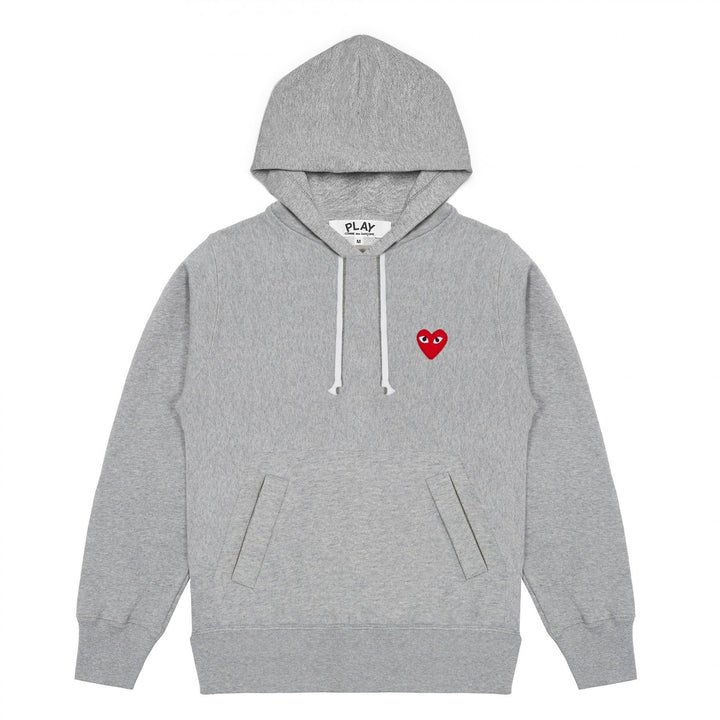
Description
In the ever-changing world of fashion, few names stand as boldly unconventional as Comme des Garçons. Founded in Tokyo in 1969 by Rei Kawakubo, the brand began as an underground label challenging the rigid norms of beauty, structure, and luxury. Over the decades, Comme des Garçons has Comme Des Garcons grown from its modest Japanese beginnings into a global powerhouse of avant-garde fashion, influencing designers, artists, and cultural thinkers across the world. Its journey is not just a story of clothing, but of philosophy, rebellion, and creativity that redefined what fashion could mean.
Origins in Tokyo: A Radical Beginning
The late 1960s and early 1970s in Japan were years of cultural upheaval, with young people seeking new ways to express themselves. Rei Kawakubo, who had no formal training in fashion, founded Comme des Garçons as an outlet for her distinctive vision. Her name for the brand, which translates from French as “like the boys,” was a reflection of her interest in challenging gender norms and traditional clothing roles.
In Tokyo, Kawakubo quickly developed a reputation for her radical approach. She rejected conventional ideas of glamour and femininity, instead producing designs that emphasized asymmetry, deconstruction, and dark, often monochromatic palettes. By the mid-1970s, Comme des Garçons had already begun cultivating a devoted following among those drawn to its bold statement against mainstream fashion.
Disrupting Paris: The Global Breakthrough
The true turning point for Comme des Garçons came in 1981, when Kawakubo presented her first collection in Paris. What followed was one of the most controversial and unforgettable debuts in fashion history. Her models walked the runway in oversized, shapeless black garments that seemed torn, distressed, and unfinished. Critics dubbed it the “Hiroshima Chic,” accusing her of glorifying destruction, but Kawakubo’s vision was not about shock for its own sake. Instead, it was a radical reimagining of beauty—one that found elegance in imperfection and strength in vulnerability.
Though polarizing, this debut instantly established Comme des Garçons as a brand that would not bow to the rules of Parisian haute couture. It was an invitation for the fashion world to reconsider its ideals, and it opened the door for Japanese designers to make their mark on a global scale.
Redefining Luxury: Beyond Clothing
As the brand gained momentum through the 1980s and 1990s, it became clear that Comme des Garçons was more than just fashion—it was an ideology. Kawakubo blurred the lines between art and clothing, creating pieces that were sculptural, conceptual, and often difficult to categorize. Runway shows became performance pieces, with models adorned in layered, bulbous silhouettes or dressed in garments resembling armor, questioning both identity and the role of clothing in society.
At the same time, Comme des Garçons began expanding beyond high fashion. In 1994, Kawakubo launched Comme des Garçons Play, a more casual line marked by the now-iconic heart logo designed by artist Filip Pagowski. This diffusion line offered a lighter, playful take on the brand while maintaining its spirit of creativity. Kawakubo also ventured into the fragrance world, releasing scents that defied traditional perfumery, often described as strange, industrial, or even unsettling. These experiments further cemented the brand’s reputation as a cultural innovator.
Collaboration and Expansion: A New Era
The early 2000s marked another evolution in Comme des Garçons’ journey. Kawakubo began collaborating with brands outside of the traditional luxury sphere, breaking down barriers between high fashion and streetwear. Partnerships with Nike, Converse, and Supreme helped bring the avant-garde spirit of Comme des Garçons to a wider audience. At the same time, collaborations with Louis Vuitton and other luxury houses proved that Kawakubo could work across the spectrum of fashion without compromising her distinct vision.
This embrace of collaboration was not just a marketing move—it reflected the brand’s core philosophy of experimentation and boundary-pushing. By engaging with diverse creative partners, Comme des Garçons ensured that its influence extended well beyond the runway and into broader cultural conversations.
Comme des Garçons Stores: Conceptual Spaces
The expansion of Comme des Garçons was not limited to clothing and collaborations. Kawakubo also transformed the way people experience shopping. Her Dover Street Market stores, launched in London in 2004, introduced a new concept in retail: a curated space blending art, fashion, and culture. These stores were not simply places to buy clothes; they were environments designed to provoke thought and inspire creativity. Featuring installations, rotating displays, and experimental layouts, Dover Street Market became a physical extension of Comme des Garçons’ philosophy.
From London, Dover Street Market expanded to Tokyo, New York, Los Angeles, and other cities, each time becoming a hub for cutting-edge design and a testament to the brand’s global reach.
Influence on the Fashion Landscape
Over more than five decades, Comme des Garçons has exerted an influence that cannot be overstated. Its rejection of conventional beauty and its embrace of experimentation paved the way for countless designers to challenge norms in their own work. The brand showed that fashion could be intellectual, even philosophical, and that clothing could serve as a medium for cultural critique.
Kawakubo’s leadership has also inspired new generations of Japanese designers such as Yohji Yamamoto, Issey Miyake, and Junya Watanabe—who began his career under Comme des Garçons before launching his own successful label. Beyond Japan, global designers often reference Kawakubo’s techniques of deconstruction, layering, and distortion in their own collections.
The Cultural Legacy of Rei Kawakubo
Central to the evolution of Comme des Garçons is the vision of Rei Kawakubo herself. Known for her reclusive personality and reluctance to explain her work, she has allowed her creations to speak for themselves. Yet her philosophy is clear: she sees fashion as a means to question, disrupt, and rebuild. This mindset has made her one of the most respected figures in the industry.
Her influence was recognized in 2017 when the Metropolitan Museum of Art’s Costume Institute dedicated its annual exhibition to her work—the first living designer honored in this way since Yves Saint Laurent. The exhibition, “Rei Kawakubo/Comme des Garçons: Art of the In-Between,” highlighted her refusal to fit neatly into categories, showcasing decades of designs that explored the tension between dualities such as beauty and ugliness, male and female, order and chaos.
A Future of Continued Experimentation
As Comme des Garçons looks toward the future, its evolution shows no signs of slowing down. Kawakubo continues to challenge herself with each collection, refusing to rest on past achievements. Younger audiences are increasingly drawn to the brand’s spirit of rebellion, whether through the accessibility of Comme des Garçons Play or the allure of its boundary-pushing runway shows.
Moreover, the brand’s collaborations, retail experiments, and influence in both luxury and streetwear ensure that its cultural footprint will remain significant for years to come. Comme des Garçons is not simply a fashion brand; it is a living, evolving experiment in creativity.
Conclusion
From its beginnings in Tokyo’s underground scene to its current status as a global force, Comme des Garçons has never followed the expected path. Rei Kawakubo built a brand rooted in defiance, constantly reshaping ideas of beauty, luxury, and style. Its evolution reflects not only the story of a label but the transformation of fashion itself into a medium for art, philosophy, and cultural dialogue.
Comme des Garçons remains a testament to the power of vision and the courage to challenge conventions. What began as a radical experiment in Tokyo has grown into a worldwide influence, shaping the way we think about fashion and, more importantly, about creativity itself.
Contact Details
Explore
+
+
+
Accessories | Apparels | Ayurvedic | Baby | Bags | Banquet Hall | Beauty | Books | Cards | Caterers | Chemist | Clinic | Clocks | Clothing | College | Community | Computer | Educational | Electronics | Fabrics | Fitness | Foods | Footwears | Gadgets | Garments | General Store | Gift | Gourmet | Grocery | Gym | Health | Home | Hospital | Hotel | Institute | Jewellery | Kitchen | Laptop | Luggage | Medical | Mobile | Movies | Music | Novelties | Office | Organic | Ornaments | Outdoors | Pharma | Pharmacy | Professional | Resort | Restaurant | Retail | School | Shoes | Shop | Sports | Store | Theme Park | Tour | Toys | Transportation | Travel | TV | Video | Wallets | Watch